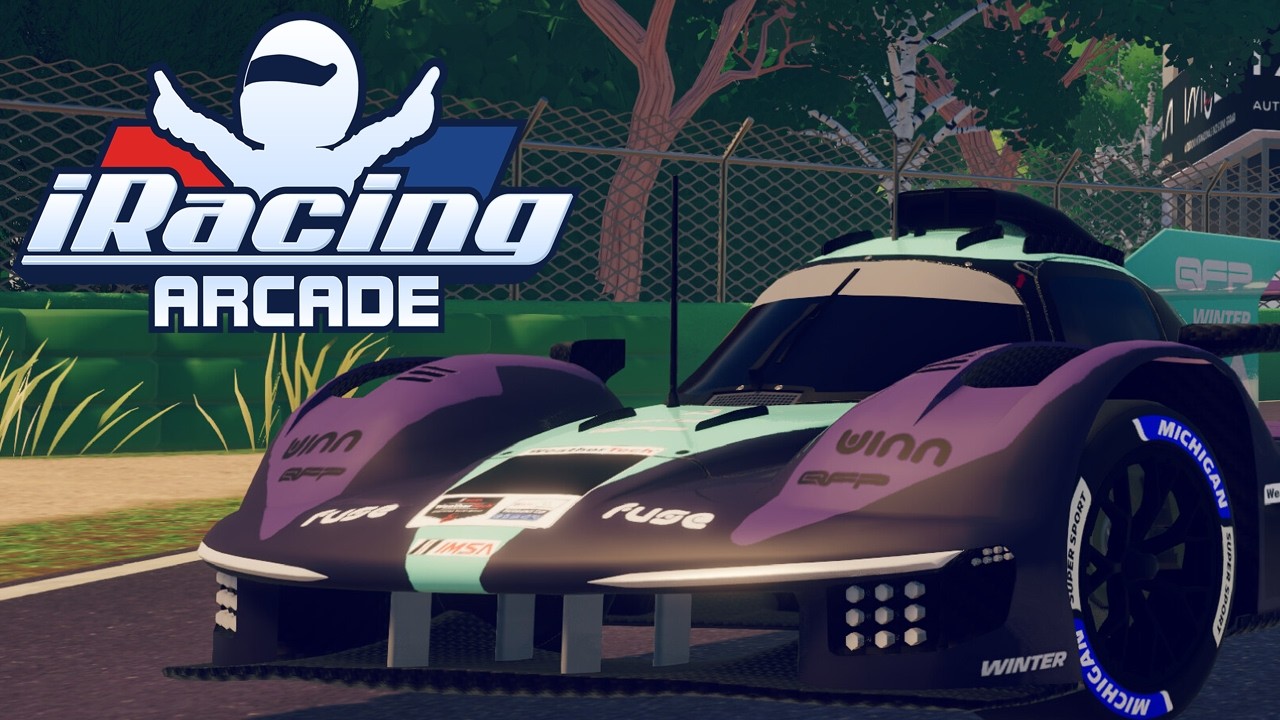
iRacing Arcade – Career Racing & Team Management (PC)
Original Fire Games blends licensed motorsport with streamlined arcade racing and campus-based progression
iRacing Arcade, developed by Original Fire Games and published in association with iRacing Studios, is a third-person racing game combining accessible physics, licensed cars and circuits, and a structured career mode centered on team management, facility upgrades, and competitive multiplayer events.
Dive deeper into the career structure, licensed series, multiplayer modes, and progression systems below

iRacing Arcade


Accessible Physics and Compact Circuit Design Blending Licensed Motorsport with Streamlined Arcade Handling
iRacing Arcade builds its identity around short-format races on condensed versions of real-world circuits. Handling is tuned for immediate control in a third-person view, yet fuel burn and tire wear remain active variables. This balance allows sessions to stay fast and readable while preserving performance management across licensed cars and series.
Career Structure and Session Flow Reducing Downtime Between Events Without Removing Progression
The career mode is structured as a continuous ladder rather than a menu-heavy championship calendar. Events load quickly, rewards are distributed immediately, and progression feeds directly into team development. The result is a racing loop designed to minimize friction while maintaining measurable advancement through increasingly competitive series.
Campus Development and Performance Boosts Facilities, Upgrades, and Strategic Resource Allocation
Race winnings are invested into a customizable motorsport campus that functions as the center of progression. Garages, research buildings, and technical facilities unlock incremental in-race boosts. Higher upgrade tiers provide stronger advantages, encouraging deliberate investment choices rather than automatic expansion.
Team Management Across Multiple Series Hiring Drivers and Expanding Competitive Reach
Players are not limited to events they personally enter. AI drivers can be recruited to compete in parallel series, extending revenue streams and maintaining visibility across licensed championships. This light management layer introduces strategic oversight without shifting the focus away from on-track performance.
Licensed Cars and Global Circuits Recognizable Motorsport Content in Stylized Form
Progression moves from entry-level categories toward premier classes such as GTP competition and the Porsche 911 GT3 Cup. Circuits are presented as compact reinterpretations of established international venues, preserving signature corner sequences while supporting shorter race durations suited to arcade pacing.
Vehicle Classes and Handling Differences Adapting Driving Styles Across Entry to Premier Vehicles
Each vehicle class introduces unique handling characteristics and performance curves. Entry-level cars allow forgiving acceleration and braking, while higher-tier classes require precise throttle control, cornering strategy, and tire management. Players are encouraged to adapt their approach as they progress, reinforcing skill development and tactical awareness.
Track Design and Circuit Adaptation Learning Corners, Elevation, and Surface Variables
Tracks are designed to emphasize both memorization and adaptation. Compact layouts retain the identity of the original circuits while challenging players to optimize braking points, overtaking opportunities, and line choice. Each track introduces subtle elevation and surface changes that impact grip and lap consistency, increasing engagement through practice and refinement.
Risk and Reward in Career Progression Balancing Personal Performance and Team Investments
Decisions on which events to personally race versus assigning AI drivers introduce risk-reward dynamics. Direct participation increases skill gain and rewards, while delegation allows broader team growth. Choosing where to focus resources requires weighing immediate gains against long-term advancement, shaping strategic play at multiple layers.
Resource Allocation and Campus Economy Upgrades, Research, and Boost Management
Players invest winnings into research and facility upgrades that affect in-race performance. Engine tuning, chassis development, and specialized garages unlock subtle mechanical advantages. Strategic planning of these upgrades ensures efficiency, allowing players to maximize performance without overextending resources or creating bottlenecks in progression.
AI Driver Behavior and Strategic Decisions Managing Team Performance Beyond the Player’s Input
AI drivers adapt to their assigned series with consistent performance influenced by upgrades and vehicle class. Monitoring results and reallocating drivers is essential for maintaining team competitiveness. This mechanic reinforces the management layer without requiring complex micromanagement, maintaining accessibility while rewarding attention to strategy.
Event Variety and Seasonal Rotations Maintaining Challenge and Engagement Through Weekly Updates
Weekly event rotations introduce variation in car types, track layouts, and competition intensity. These rotations prevent gameplay from becoming repetitive and require players to continually adapt their strategy, ensuring that progression is both skill-based and dynamic over extended play sessions.
Leaderboards and Competitive Incentives Chasing Global Time Trials and Player Rankings
Global leaderboards encourage mastery of lap times and racing lines. Players can compare results with competitors worldwide, adding motivation for iterative improvement. Weekly rotations and scoring systems maintain freshness while reinforcing the connection between skill development and competitive recognition.
Accessibility and Learning Curve Balancing Ease of Entry with Depth of Mastery
The game is approachable for newcomers with simple controls and short session lengths, yet the underlying mechanics provide depth for experienced players. Subtle physics, vehicle differentiation, and strategic campus management create multiple layers of engagement without overwhelming the core arcade experience.
Platform Performance and Technical Scope Optimized PC Requirements and Broad Hardware Accessibility
On PC, iRacing Arcade targets mid-range hardware with DirectX 12 support and modest storage demands. The specification profile indicates an emphasis on accessibility without compromising licensed content or mechanical systems, aligning performance expectations with a wide range of modern systems.
Final Verdict A Structured Hybrid of Arcade Racing and Motorsport Management
iRacing Arcade positions itself between traditional arcade racers and dedicated automobile simulations. By combining accessible physics, licensed cars and circuits, campus-based progression, and optional multiplayer competition, it delivers a focused career-driven racing experience built on steady advancement rather than spectacle.
The VoxOdyssey Project Mission Statement for Feature games
I highlight what makes each game unique by examining gameplay mechanics, design choices, and storytelling. By analyzing systems, level design, and play styles, and referencing official media and assets, I aim to provide accurate, informative, and trustworthy insights. While I strive for accuracy, some details may change or be updated over time. Players can use this information to understand each title’s features and mechanics and make their own judgments.
iRacing Arcade – Gameplay Action and Racing Mechanics Screenshots Display Vehicles, Tracks, On-Track Competition, and Player-Controlled Racing Moments


iRacing Arcade Trailer – Gameplay Preview of Racing, Vehicles, and Tracks
Watch the iRacing Arcade trailer to see dynamic races in action, including licensed cars, global tracks, and campus progression. The video highlights on-track gameplay, vehicle handling, and multiplayer moments, giving a clear introduction to the racing experience.