Sprint City – Momentum-Based 2D Competitive Platformer
Shared-world parkour racing from Second Stage Studio featuring Clockout multiplayer and browser Friend Link play
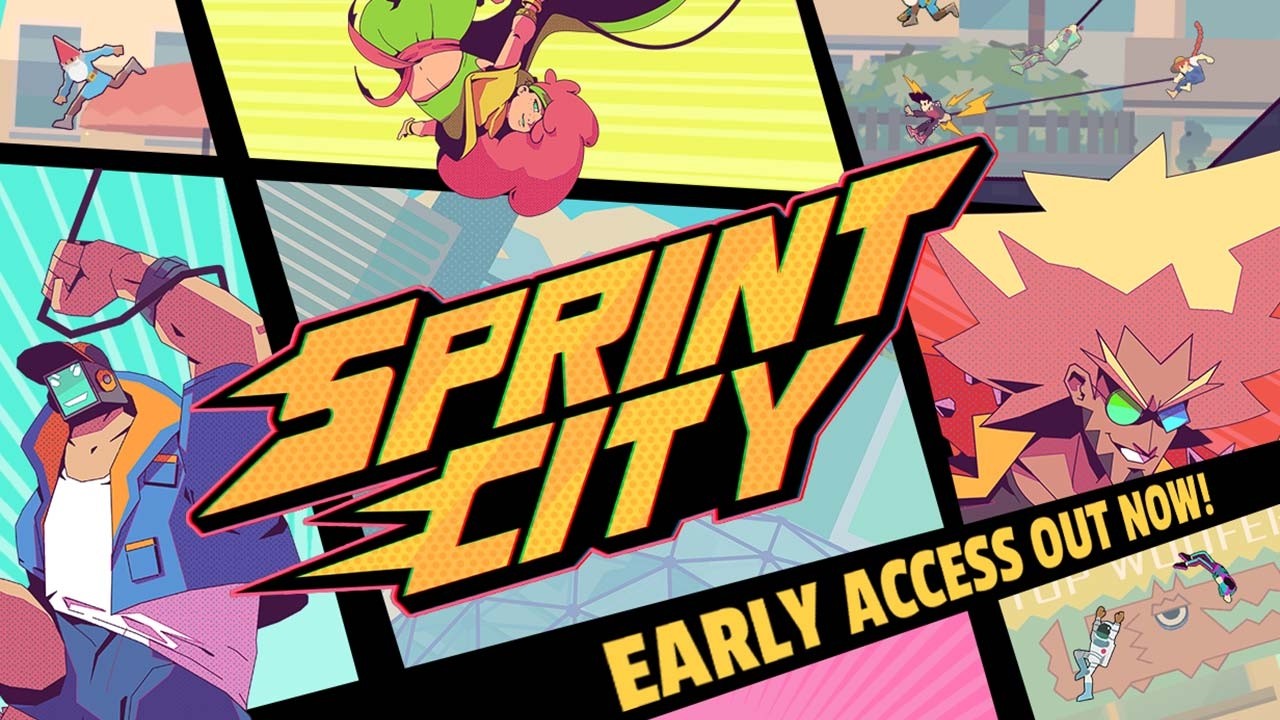
Sprint City is a momentum-driven 2D competitive platformer by Utrecht-based Second Stage Studio. Race across a shared urban map using parkour movement, wall runs, grapples, and rail grinds while competing in Clockout multiplayer races, time trials, and leaderboard challenges.
Think you can master the city's fastest routes? Dive deeper into Sprint City's mechanics below

Sprint City


Momentum Movement and Urban Parkour in Sprint City A 2D Competitive Platformer Built Around Velocity, Traversal Chains, and Route Mastery
Sprint City emphasizes momentum-driven movement where wall runs, grapples, and rail grinds chain into continuous parkour sequences. The game’s urban cityscape is designed as a shared-world arena, where every jump, slide, or launch contributes directly to maintaining speed. Players are required to read environmental cues, plan aerial routes, and exploit hidden shortcuts, reinforcing the interplay between spatial awareness and velocity. Unlike traditional level-based platformers, Sprint City transforms the city into a competitive racecourse where flow state is critical for optimal performance. Each route choice has consequences for lap times and positioning, demanding skillful traversal to maintain a competitive edge in Clockout multiplayer and leaderboard challenges.
Clockout Mode and the Pressure of Time-Based Racing A Multiplayer Format That Replaces Distance With Time Depletion
At the core of Sprint City is the Clockout multiplayer mode, which substitutes distance-based progression with a time-depletion system. Players start each match with limited time, and once the first racer crosses the finish line, the remaining competitors’ timers begin draining, forcing rapid decision-making under pressure. Each subsequent lap reduces the available time, eliminating runaway leaders and encouraging constant adaptation. This rubber-banding approach balances skill and strategy, rewarding those who can optimize routes while remaining acutely aware of time constraints. Clockout transforms the urban map into a high-stakes tactical environment, where even minor miscalculations in momentum or route choice can alter competitive outcomes.
Shared World Design and Route Discovery A Persistent Urban Map That Encourages Exploration Between Races
Sprint City departs from linear track design by offering a shared city map that persists across races. Players can explore rooftops, alleyways, and elevated rails, uncovering multiple traversal paths and secret shortcuts. This shared-world approach introduces a metagame where knowledge of city layout directly affects competitive performance. Exploration is incentivized, as faster lines discovered during non-competitive exploration can translate into time gains during Clockout matches. The environment itself serves as both playground and challenge, encouraging repeated runs to learn the nuances of building heights, wall angles, and momentum transitions that form the backbone of elite-level racing strategies.
Freerunning Systems and Velocity-Based Gameplay Movement Mechanics That Reward Flow, Precision, and Timing
Sprint City’s movement mechanics rely on a velocity-stacking system: the exit speed from a rail grind directly affects acceleration into a wall-run or aerial maneuver. This integration ensures that maintaining momentum is not optional but essential for effective traversal. Players must chain movements seamlessly, considering trajectory, momentum decay, and environmental obstacles simultaneously. Mistimed jumps or misaligned grapples can disrupt the flow state, forcing a recalibration of movement strategy mid-run. The system creates a natural skill ceiling, where mastery of continuous motion, momentum conservation, and precision timing defines high-level play. Every session encourages iterative improvement and route optimization.
Solo Time Trials and Competitive Leaderboards Practice Routes, Refine Movement, and Compete for the Fastest Times
Beyond multiplayer competition, Sprint City offers solo time trials and daily challenges that encourage mastery of traversal and parkour systems. These modes allow players to experiment with route variations, identify efficiency gains, and test mechanical combinations without the immediate pressure of opponents. Global leaderboards track fastest times, creating a persistent competitive ecosystem where individual performance contributes to community rankings. This integration of practice modes and public rankings reinforces the game's emphasis on skill-based progression and provides structured environments for refining speed, precision, and route knowledge.
Friend Link and Browser-Based Multiplayer Access Joining Races Without Installation Through a Simple Shareable Link
The Friend Link system demonstrates technical accessibility by allowing synchronous multiplayer sessions between Windows clients and web-based participants. Game owners can share a simple link, enabling friends to join matches in a browser without purchasing or installing the client. This hybrid-platform design ensures consistent physics across both instances, allowing velocity-based mechanics and parkour chains to remain precise. The feature expands the player base for multiplayer races and reinforces the shared-world concept, creating opportunities for casual participation without compromising competitive integrity or gameplay fidelity.
Early Access Development and Community Feedback A Platform for Refining Movement Systems and Multiplayer Racing
Sprint City launched in Steam Early Access, allowing the development team to iterate on movement physics, race pacing, and urban map design with community input. Early Access provides a controlled environment for players to explore the city, experiment with routes, and test Clockout mechanics, creating a feedback loop that informs updates and balance adjustments. Community engagement ensures that both traversal systems and competitive rules evolve based on empirical play data, strengthening the game's long-term skill ceiling and the effectiveness of its momentum-based mechanics.
Technical Evolution from SpeedRunners From Closed Track Racing to an Open Urban Parkour Environment
Sprint City represents a technical evolution from the developer’s previous work on SpeedRunners. While SpeedRunners relied on linear, screen-constrained levels, Sprint City introduces a fully shared-world urban map, offering non-linear traversal options and multiple pathfinding opportunities. This shift fundamentally changes spatial strategy and competitive approach, requiring players to adapt to route complexity and maintain momentum over varied terrain. The design leverages prior expertise in tight movement systems while expanding the gameplay canvas, blending high-speed platforming with open-environment exploration.
Design Focus on Skill and Route Optimization Movement Efficiency Becomes the Core Strategy of Every Race
Each Clockout race in Sprint City rewards efficient movement, careful planning, and quick adaptation. Players optimize route selection, chaining traversal mechanics to preserve momentum. Mastery involves understanding environmental interactions, the physics of velocity stacking, and timing to maintain flow across rails, walls, and grapples. As players refine strategies, they develop personalized racing lines and exploit shortcuts, creating a high-skill metagame centered entirely on traversal proficiency rather than combat or arbitrary challenges.
Final Verdict A Momentum-Driven Platformer That Turns Movement Into Competition
Sprint City redefines competitive 2D platforming by placing momentum, route mastery, and urban parkour at the center of gameplay. The shared-world city map, Clockout multiplayer system, and Friend Link browser access create a framework where speed and precision are rewarded. From solo time trials to eight-player races, the game emphasizes skill-based progression and strategic route discovery. It is a technical evolution of SpeedRunners, offering a platform where movement itself becomes the ultimate competitive tool in a fully integrated urban environment.
The VoxOdyssey Project Mission Statement for Feature games
I highlight what makes each game unique by examining gameplay mechanics, design choices, and storytelling. By analyzing systems, level design, and play styles, and referencing official media and assets, I aim to provide accurate, informative, and trustworthy insights. While I strive for accuracy, some details may change or be updated over time. Players can use this information to understand each title’s features and mechanics and make their own judgments.
Sprint City – 2D Competitive Platformer Urban Parkour Gameplay Screenshots show momentum-based movement, Clockout races, and urban city traversal


Sprint City Trailer – 2D Platform Racing and Urban Parkour Action
See Runagades wall-run, grapple, and race through the city in Clockout mode! Watch the trailer below for high-speed parkour gameplay.

Stay connected with Sprint City