Pirate Cove Simulator – Pirate Tavern Management and Undead Economy Sim
Pirate Cove Simulator combines tavern management, distillery crafting, and undead trading in a pirate afterlife setting
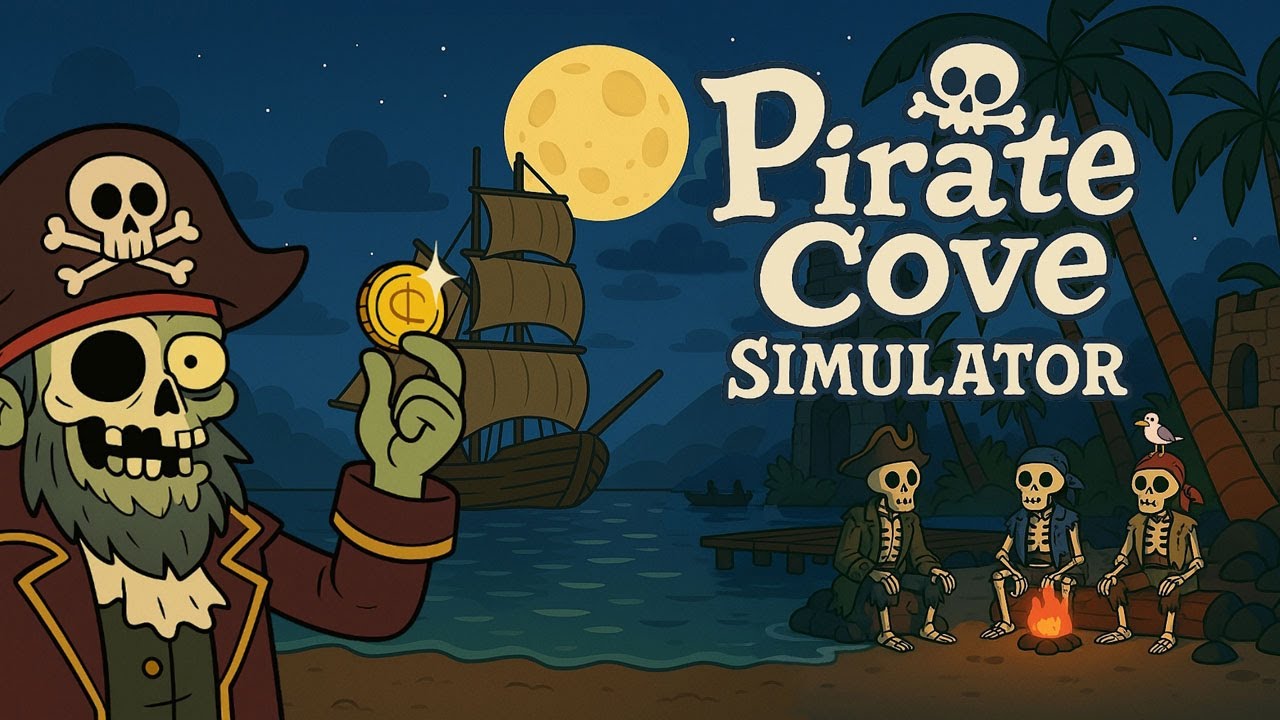
Pirate Cove Simulator places players in control of a tavern on the Island of the Damned, where managing inventory, brewing rum, and trading with undead pirates form the core of a resource-driven economy simulation built around progression, automation, and exploration.
Build your tavern, manage the dead, and see how far your pirate enterprise can go

Pirate Cove Simulator


Pirate Cove Simulator Tavern Management and Undead Economy Systems Trading, Distillery Production, and Island of the Damned Progression
Pirate Cove Simulator gameplay is structured around a pirate management sim framework set on the Island of the Damned, where the core loop revolves around operating a tavern, managing inventory, and engaging in trade with undead pirates. Player interaction focuses on maintaining stock levels, setting prices, and ensuring that the tavern remains functional as a central hub of economic activity. The presence of undead patrons creates a closed-loop economy where gold circulates between vendors and customers, reinforcing the importance of supply and demand balance. Distillery production adds another layer to the system, allowing players to convert gathered resources into rum through crafting processes that contribute to overall profitability. As operations expand, the player gradually transitions from manual tasks to higher-level oversight, particularly as crew automation becomes available. If inventory management is poorly maintained or pricing is misaligned with demand, then the efficiency of the tavern decreases, which can slow progression within the economy-driven structure.
Distillery Crafting and Resource Management Systems Rum Production, Ingredient Gathering, and Recipe Optimization
The distillery system in Pirate Cove Simulator introduces a crafting-focused layer that integrates resource management with production output. Players gather materials from the Island of the Damned, including various plants and environmental resources, which are then combined to produce rum and other consumable goods. Understanding how to brew rum in Pirate Cove Simulator involves selecting appropriate ingredient combinations and managing available resources to maintain consistent production. The distillery operates as part of a broader economic loop, where crafted items are sold through the tavern to generate income. As players progress, optimizing distillery recipes becomes increasingly relevant, particularly when balancing resource scarcity against production demand. If ingredient acquisition is not aligned with production needs, then output may become inconsistent, affecting both inventory stability and revenue generation within the overall simulation.
Trading With Undead Pirates and Economic Interaction Pricing Strategy, Inventory Flow, and Closed Economy Design
Trading with undead pirates forms a central component of Pirate Cove Simulator’s economy management simulation framework. NPCs within the game act as recurring customers who purchase goods from the player’s tavern, creating a continuous exchange of resources and currency. The player is responsible for managing pricing strategies, ensuring that goods are neither underpriced nor overpriced relative to demand patterns. Inventory flow plays a critical role, as shortages can reduce sales opportunities while overstocking can limit efficiency. The system encourages monitoring of supply levels and adjusting operations accordingly to maintain steady revenue. This interaction model reflects a sandbox pirate business simulator approach, where economic decisions directly influence progression. If pricing and inventory are not carefully balanced, then overall profitability may decline, which in turn affects the ability to expand and upgrade operations within the game world.
Fishing, Exploration, and Supplemental Activities Resource Gathering, Treasure Hunting, and Optional Gameplay Loops
In addition to core tavern and distillery management, Pirate Cove Simulator incorporates exploration-based activities such as fishing and treasure hunting. These systems function as supplementary mechanics that provide alternative methods of resource acquisition and engagement outside the primary economic loop. Fishing allows players to gather materials that may be used within crafting or sold for profit, while treasure hunting introduces opportunities to discover valuable items across the island. These activities contribute to Pirate Cove Simulator fishing and treasure hunting gameplay variety by offering optional pathways that support progression without being mandatory for advancement. The integration of these systems adds pacing diversity to the overall experience. If players choose to engage with exploration consistently, then it can supplement income and resources, though the core progression remains primarily tied to tavern operations and trading systems.
Automation, Crew Systems, and Operational Scaling Delegation, Workflow Management, and Efficiency Growth
As operations expand within Pirate Cove Simulator, crew automation systems become an important factor in maintaining efficiency. Players can delegate certain tasks to crew members, reducing the need for constant manual input across all aspects of tavern and distillery management. This allows the player to focus on higher-level decision-making, such as expansion planning, pricing adjustments, and resource allocation. Automation introduces a shift in gameplay structure, where the player transitions from direct interaction to supervisory management. This reflects common design patterns found in modern simulation games, where scalability is achieved through delegation rather than increased manual complexity. If automation is not effectively utilized, then operational tasks may become time-consuming, limiting the player’s ability to expand and optimize their business within the simulation framework.
Replayability and Sandbox Progression Structure Iterative Growth, System Interactions, and Economic Scaling
Replayability in Pirate Cove Simulator is derived from its sandbox structure and the interaction of its core systems. Each play session involves managing a tavern economy, experimenting with distillery production, and adapting to resource availability across the Island of the Damned. The absence of a fixed linear progression path allows players to approach challenges in different ways, focusing on alternative strategies for pricing, inventory management, and resource gathering. Over time, players can refine their approach based on observed system behavior, improving efficiency across repeated sessions. The combination of trading, crafting, and exploration ensures that progression remains flexible and driven by player decisions. If players iterate on their strategies and adjust to system feedback, then long-term engagement is supported through gradual optimization rather than static progression milestones.
Final Verdict A Structured Pirate Management Sim Focused on Economy, Crafting, and System Interaction
Pirate Cove Simulator presents a coherent pirate management sim experience centered on economy-driven progression, tavern operations, and distillery crafting within the Island of the Damned setting. Its systems emphasize trading with undead pirates, resource management, and automation through crew delegation, forming a gameplay loop built around optimization and scalability. The inclusion of exploration activities such as fishing and treasure hunting adds supplementary depth, while the distillery system reinforces the importance of crafting and recipe management. Overall, the experience is defined by interconnected mechanics that reward strategic planning and efficient resource allocation across repeated sessions. While it adheres to established conventions within the simulation genre, its thematic framing and system-driven structure provide a consistent framework for players who engage with economy-focused sandbox gameplay.
The VoxOdyssey Project Mission Statement for Feature games
I highlight what makes each game unique by examining gameplay mechanics, design choices, and storytelling. By analyzing systems, level design, and play styles, and referencing official media and assets, I aim to provide accurate, informative, and trustworthy insights. While I strive for accuracy, some details may change or be updated over time. Players can use this information to understand each title’s features and mechanics and make their own judgments.
Pirate Cove Simulator Gameplay – Tavern Management and Undead Economy Systems Screenshots show trading, distillery crafting, and Island of the Damned simulation


Devil Jam Trailer – Top-Down Survivor Roguelite Combat and 12-Weapon Builds
Enter the underworld and see rhythm-influenced combat, wave survival, and layered builds in action. Watch the trailer below to explore more gameplay moments.

Stay connected with Pirate Cove Simulator