Last Man Sitting – Roguelite Arena Shooter with Office Chair Combat
Survive chaotic enemy swarms, draft powerful upgrades, and master physics-driven chair combat in a corporate arena
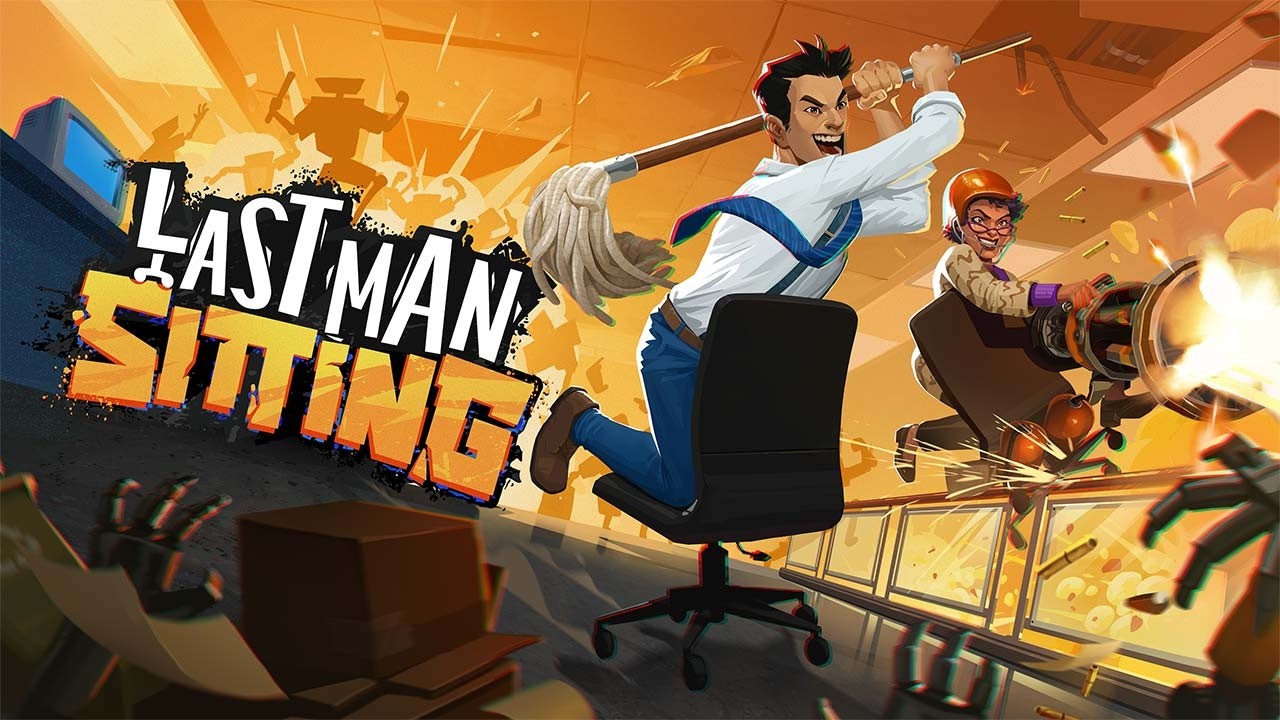
Last Man Sitting is a roguelite arena shooter by DoubleMoose Games and Raw Fury. Glide, grind, and battle through waves of sentient office appliances while building powerful upgrade combinations in single-player, co-op survival runs, or competitive PvP arena matches.
Ready to roll into the office battlefield? Discover the chaos waiting below

Last Man Sitting


Physics-Based Office Chair Combat and Arena Mobility in Last Man Sitting Momentum, Grinding, and Movement Systems That Redefine the Roguelite Arena Shooter
Last Man Sitting builds its core gameplay around a physics-driven movement system where the player navigates combat arenas while seated in a rolling office chair. Momentum becomes a tactical tool rather than a cosmetic detail. Players glide, jump, and grind across surfaces to maintain speed while avoiding enemy projectiles. Mastering directional drift, timing jumps, and chaining grinds together is essential, especially in high-density enemy zones. This unusual mobility system separates Last Man Sitting from many roguelite arena shooters that rely on standard character movement. The result is a combat rhythm that blends arcade-style flow with the precision required in bullet hell survival games, rewarding players who understand the nuances of momentum-based control.
Swarm Combat and Bullet Hell Survival Encounters Managing Enemy Waves and Projectile Chaos in a Corporate Office Battlefield
Combat unfolds through escalating waves of hostile machines and animated workplace devices. These sentient office appliances create a battlefield filled with complex projectile patterns reminiscent of classic bullet hell survival games. Early waves introduce smaller enemy units that test movement routes and positioning, while later encounters expand into large swarm formations capable of covering significant portions of the arena with overlapping attacks. Players must balance aggression and evasion, using arena geometry and physics-based movement to survive. Enemy variety, from nimble office bots to larger appliances that function as minibosses, ensures that no single strategy dominates, keeping each run dynamic and challenging.
Roguelite Progression Systems and Power-Up Drafting Building Unique Combat Synergies Through Upgrade Selection
Progression in Last Man Sitting follows a roguelite structure where each survival run develops through experience points and randomized power-up drafting. Defeating enemies grants levels that unlock the choice between multiple upgrades, allowing players to tailor builds based on their preferred playstyle. With over 200 power-ups, ranging from enhanced mobility, damage amplification, and utility effects, experimentation is central to success. Players are encouraged to discover synergistic combinations that amplify momentum-based movement or crowd-control capabilities. Drafting choices also influence long-term strategic planning, as selecting complementary upgrades can turn challenging swarm waves into manageable encounters, rewarding careful observation and tactical foresight.
Weapons, Loadouts, and Arena Combat Variety From Improvised Workplace Tools to Heavy Firepower
The weapon system emphasizes the game’s satirical corporate theme, offering an array of office-inspired firearms and improvised tools. Players can choose equipment such as janitor mops modified as melee weapons, stapler guns, and miniguns capable of clearing large enemy clusters. Each weapon features unique recoil, projectile behavior, and interaction with physics-based movement. Selecting a loadout is strategic, as heavier weapons may slow momentum while lighter, more mobile weapons complement high-speed arena traversal. Players must weigh offensive potential against their ability to maintain mobility, creating a constantly shifting tactical landscape in every match.
Cooperative Survival and Multiplayer Arena Modes Co-op Roguelite Runs and Competitive King of the Hill Matches
Beyond solo survival runs, Last Man Sitting offers cooperative gameplay for up to four players, allowing teams to navigate enemy swarms and synchronize builds for maximum effect. Communication and positional awareness become critical in dense arenas, as overlapping projectile patterns can disrupt both movement and offensive actions. The competitive king-of-the-hill mode challenges players to dominate a central zone while managing both enemy threats and opponents’ disruptive tactics. This multiplayer approach expands replayability, blending skill-based movement with strategic planning, and demonstrates how physics-based combat translates seamlessly from solo runs to cooperative and competitive encounters.
Enemy Design and Corporate Satire Worldbuilding Office Appliances Become the Unexpected Threat
The game’s unique setting transforms mundane office equipment into fully realized adversaries, contributing both to thematic cohesion and mechanical variety. Printers, copiers, and automated cleaning robots form the base of enemy swarms, each with distinct attack patterns and movement behaviors. These designs reinforce the corporate satire tone while maintaining gameplay clarity. Boss units, including larger appliances and miniboss variants, introduce attack sequences that challenge players to exploit arena geometry and their mobility advantages. This integration of humor and threat ensures the world feels cohesive, engaging, and mechanically rich.
Boss Encounters and The Manager Showdown Escalating Challenges That Test Movement and Build Strategy
Major encounters culminate in battles against powerful bosses, most notably The Manager, who employs area denial attacks and summons reinforcements that intensify swarm pressure. Surviving these fights requires strategic selection of power-ups, careful loadout management, and mastery of the office chair’s physics-driven movement. The Manager’s attacks test player adaptability, forcing adjustments mid-combat to avoid being overwhelmed, and illustrate the game’s emphasis on dynamic tactical decision-making rather than static offense or defense.
Technical Performance and Hardware Considerations Managing Physics Simulation and Swarm Density on PC
The PC version supports detailed physics simulations while remaining accessible on a range of hardware, with minimum requirements including GTX 970-class graphics and mid-range multi-core CPUs. High-density swarm waves can stress physics calculations, particularly in late-game survival runs. Players may need to adjust particle density or disable nonessential visual effects to maintain optimal frame rates, which is crucial as movement responsiveness directly impacts survival. The game leverages the physics engine not just for mobility but also for environmental interaction, making hardware performance a key factor in competitive or cooperative runs.
Genre Context and Indie Shooter Position Where Last Man Sitting Fits Among Modern Roguelite Arena Shooters
Within the landscape of modern indie shooters, Last Man Sitting stands out due to its momentum-focused office chair mechanics and thematic humor. Unlike conventional top-down roguelites or sprite-based bullet hell games, it emphasizes 3D spatial awareness, kinetic control, and physics-driven strategy. The blend of co-op and competitive arena modes places it alongside titles such as Vampire Survivors or Enter the Gungeon in terms of roguelite progression, but with a distinctive movement and environmental approach that differentiates it from typical arcade-style swarm shooters.
Replayability, Build Variety, and Community Strategies Experimenting with Power-Ups, Loadouts, and Tactical Movement for Long-Term Engagement
The combination of randomized power-up drafting, diverse weapon loadouts, and variable arena layouts ensures high replay value. Community strategies often focus on optimizing momentum chains, selecting synergistic upgrades that enhance mobility or crowd control, and coordinating co-op play to control swarm density. This systemic depth encourages experimentation, allowing players to discover new ways to navigate arenas or approach boss encounters. Continuous engagement emerges not only from mechanical mastery but also from exploring combinations and countering increasingly complex swarm formations.
Final Verdict A Momentum-Driven Roguelite Arena Shooter Built Around Movement and Chaos
Last Man Sitting delivers a unique take on the roguelite arena shooter genre by combining physics-based office chair movement, escalating enemy swarms, and an extensive pool of power-ups. Its cooperative and competitive modes extend replayability, while the corporate satire theme adds personality to the chaotic combat. Mastery of momentum, strategic drafting of power-ups, and adaptability during boss encounters define success, making it a distinctive, challenging, and highly replayable bullet hell survival experience.
The VoxOdyssey Project Mission Statement for Feature games
I highlight what makes each game unique by examining gameplay mechanics, design choices, and storytelling. By analyzing systems, level design, and play styles, and referencing official media and assets, I aim to provide accurate, informative, and trustworthy insights. While I strive for accuracy, some details may change or be updated over time. Players can use this information to understand each title’s features and mechanics and make their own judgments.
Last Man Sitting – Roguelite Arena Shooter and Office Chair Combat Screenshots show swarm combat, physics-based movement, power-ups, and arena action


Last Man Sitting Trailer – Office Chair Combat, Swarm Shooters, and Roguelite Action
See office chairs glide, bullets fly, and appliances revolt! Watch the trailer below for chaotic arena combat and power-up mayhem.

Stay connected with Last Man Sitting