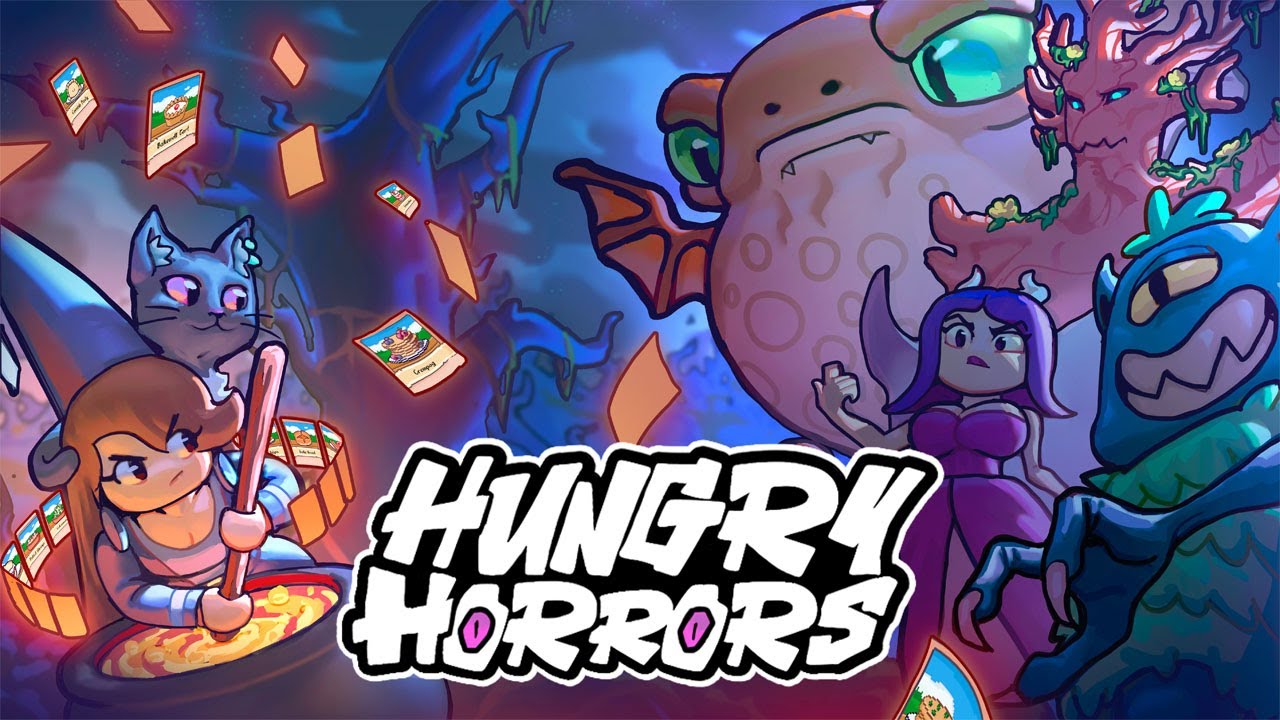
Hungry Horrors Review – A Roguelite Card Game of Cooking & Folklore
Cooking, Deckbuilding, and Folklore in a Roguelite Card Adventure Where You Feed Monsters Instead of Fighting Them
Hungry Horrors offers a refreshing twist on the roguelite card genre by replacing swords and spells with spices and skillets. Drawing heavily from British and Irish folklore, the game challenges players to satisfy the appetites of legendary monsters through clever deckbuilding, flavor management, and strategic cooking rather than combat. The result is a darkly humorous, mechanically rich experience that blends narrative progression with culinary creativity.
Learn more about Hungry Horrors’ cooking-based combat, deckbuilding strategy, and flavor-driven mechanics below

hungry-horrors


A Culinary Twist on Roguelite Combat
Hungry Horrors is a card-based roguelite adventure that replaces traditional combat with cooking, positioning itself at the intersection of deckbuilding strategy, narrative progression, and folklore-inspired world design. Instead of attacking enemies, players construct and refine a culinary deck designed to satisfy the cravings of mythical creatures drawn from British and Irish legend. Each encounter revolves around preparing and serving dishes that match a Horror’s unique tastes before they reach the player, reframing the usual risk-reward loop of roguelites into a system built around flavor management and timing.
Deckbuilding Through Flavor and Combos
Each Horror has distinct preferences and aversions, meaning success depends on learning what to serve, what to avoid, and how to efficiently chain flavors to maximize satisfaction before the creature’s hunger meter fills. This creates a tactical layer that blends pattern recognition with resource management, replacing health bars and damage numbers with appetite thresholds and culinary efficiency.
Roguelite Progression and Persistent Upgrades
Progression follows a permanent roguelite structure. Runs take players through a series of environments inspired by British and Irish landscapes, such as enchanted woods, meadows, and bogs, each populated with encounters, artifacts, and narrative elements tied to regional folklore.
Defeat sends players back to a central base, where they can refine recipes, unlock new abilities, and improve their overall culinary toolkit. These upgrades persist across runs, gradually expanding the range of ingredients, combos, and strategic options available. This structure encourages experimentation and replayability, as players refine both their decks and their understanding of monster behaviors over multiple attempts.
Folklore-Driven Narrative and Characters
Narrative integration is woven directly into the gameplay loop. The game’s encounters feature legendary figures such as Black Annis, Jenny Greenteeth, and Grendel, each portrayed with distinct personalities and appetites rooted in myth. Rather than serving as static bosses, these characters function as narrative nodes that reveal story details, cultural references, and thematic elements tied to hunger, fear, and folklore.
Exploration segments introduce artefacts, cookware, and spices that carry both mechanical and narrative significance, reinforcing the sense that progression is not just mechanical but also world-driven.
Visual Style, Tone, and Genre Identity
Visually and tonally, Hungry Horrors adopts a pixel art style and dark humor, reinforcing its thematic contrast between cozy cooking and looming danger. The game positions itself within the deckbuilding roguelite genre but distinguishes itself through its non-violent core mechanic and culinary framing.
By transforming combat into meal preparation and enemy defeat into successful feeding, it offers an alternative interpretation of progression and challenge that emphasizes preparation, knowledge, and adaptation rather than direct confrontation.
Overall Impression
Overall, Hungry Horrors presents a structurally familiar roguelite loop supported by a distinct mechanical twist and a strong folklore foundation. Its systems are designed around learning monster preferences, optimizing flavor interactions, and gradually expanding a culinary arsenal across repeated runs, situating the game as a narrative-driven, strategy-focused entry in the card-based roguelite space.
Explore Hungry Horrors screenshots revealing culinary deckbuilding and folklore-inspired monster encounters.


Feed legendary monsters and master flavor-driven roguelite card combat.
Watch the trailer below to see Hungry Horrors’ cooking, deckbuilding, and folklore-inspired adventure in action!