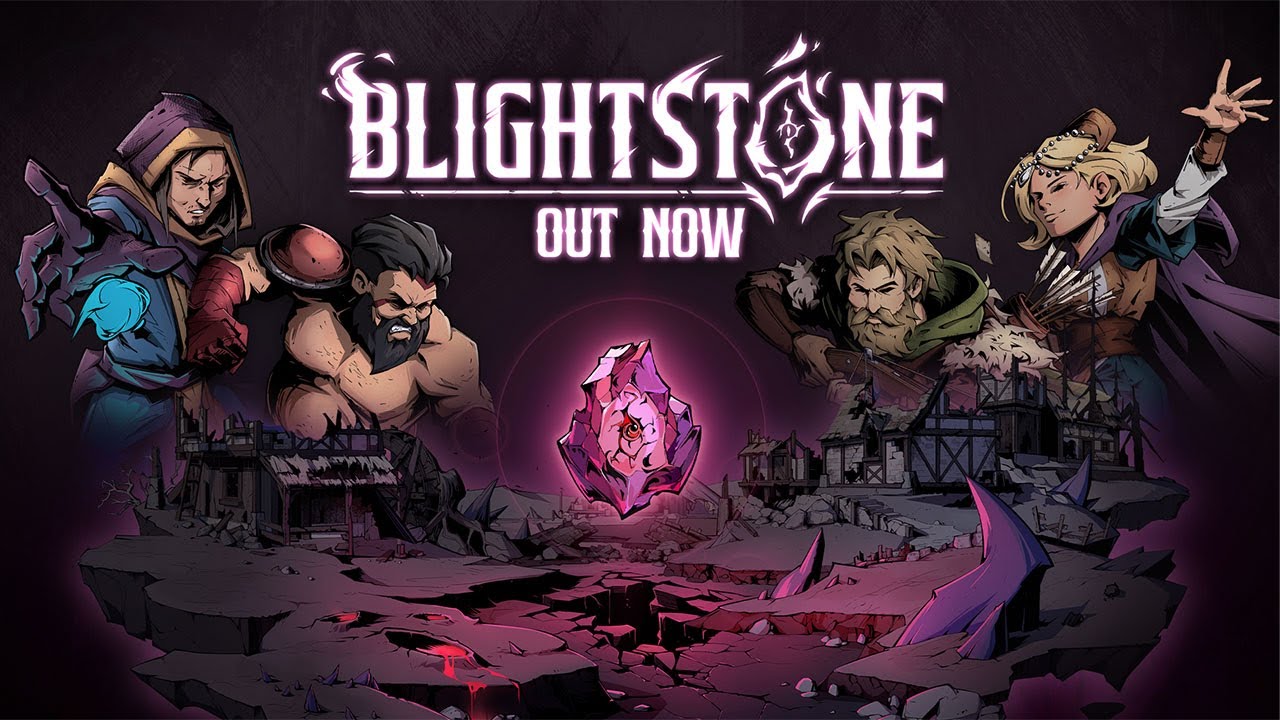
Blightstone – Tactical Roguelike Strategy Review
Blightstone is a turn-based strategy roguelike featuring free movement, dynamic environments, procedural progression, and team-based tactical combat in a corrupted fantasy world.
In Blightstone, players command a party of adventurers on a mission to escort the mystical Earthglass Crystal to the Infernal Rift. Every decision matters as you navigate open battlefields, manipulate the environment, and adapt to dynamic weather and hazards. With roguelike progression, tactical depth, and persistent unlocks, each run challenges your strategy while revealing the dark secrets of a corrupted fantasy world.
Learn more about Blightstone’s turn-based combat, environmental tactics, party progression,and roguelike systems in the sections below.

Blightstone


Blightstone is a turn-based strategy game built around roguelike progression, tactical positioning, and systemic environmental interaction.
Players lead a small party of adventurers tasked with escorting the Earthglass Crystal to the Infernal Rift in order to destroy the Blightstone and its demon overlord, Korghul. Combat unfolds on open battlefields without grid-based restrictions, allowing both players and enemies to maneuver freely around cover, terrain features, and hazards. This design emphasizes spatial awareness, line of sight, and environmental control rather than rigid movement patterns.
Environmental Interactions and Dynamic Conditions
Encounters are structured around turn-based decision-making, where terrain, weather, and object placement play a central role. Long grass can be used for concealment or burned to deny cover, water surfaces can amplify electrical effects, and battlefield objects can be repositioned or destroyed to shape engagements. Dynamic weather systems further alter combat conditions, with fog obscuring visibility, rain enhancing certain elemental attacks, and wind influencing accuracy. These variables create shifting tactical contexts that require adaptive planning rather than static build strategies.
Roguelike Progression and Character Classes
Progression follows a roguelike loop where failure is an expected and integrated part of the experience. Each run offers opportunities to recruit new heroes, unlock additional skills, and refine strategies through accumulated knowledge and persistent unlocks. Characters fall into defined classes—Brawler, Hunter, Arcanist, Druid, and Priest—each offering distinct combat roles and synergies. Players expand their tactical toolkit by acquiring active and passive abilities, including melee, ranged, area-of-effect, grappling, and support skills, which can be combined to produce layered combat interactions.
Status Effects and Risk-Reward Mechanics
Status effects are a core mechanical pillar, with conditions such as bleeding, poison, stun, burn, and binding influencing both enemy behavior and party survivability. These effects introduce risk-reward dynamics, as stacking conditions can quickly turn encounters in the player’s favor, while mismanagement can lead to rapid collapse. The Earthglass Crystal itself also gains abilities, reinforcing its role as both an objective and an active participant in combat.
Camp Management and Resource Planning
Outside of battle, the game incorporates a day-night cycle and camp management layer. Each night, players must manage resources gathered during combat to heal the party and mitigate the spreading corruption of the Blight. This structure links combat efficiency directly to long-term survival, encouraging careful resource use rather than short-term power spikes.
Procedural Generation and Narrative Discovery
Procedural generation governs the layout of encounters, enemy compositions, and progression paths, ensuring that no two journeys are identical. Narrative elements unfold gradually across runs, revealing the backstory of the Blightstone, the Earthglass, the Infernal Rift, and the corrupted world through repeated attempts rather than linear storytelling. This approach integrates narrative discovery with mechanical mastery, positioning Blightstone within the tactical roguelike genre while emphasizing environmental systems, adaptive combat design, and persistent strategic learning.
Explore Blightstone screenshots revealing tactical combat and dynamic environments.


Command a party of heroes through corrupted battlefields and master tactical roguelike combat.
Watch the trailer below to experience the adventure and strategic action!